
You're getting ready to leave the house when your toddler insists on putting on their own shoes. After several unsuccessful attempts, frustration takes over. The shoes are thrown, tears begin to fall, and suddenly, something that seemed so simple has become overwhelming.
Or perhaps you've told your preschooler it's time to leave the playground. Just moments ago, they were laughing and playing. Now they're crying, protesting, and refusing to move.
Sound familiar?
Young children can experience emotions with remarkable intensity. Excitement can turn into frustration, disappointment can feel overwhelming, and even small changes in plans can bring big reactions.
But these moments offer something important: opportunities to help children understand their feelings and gradually learn how to manage them.
At the Children's Museum of Oswego (CMOO), we recognize that learning isn't limited to letters, numbers, and academic skills. Every time children interact with others, try something new, or work through a challenge, they have opportunities to develop important social and emotional abilities.
And play provides a natural environment for that learning to happen.
Why Do Little Children Have Such Big Feelings?
Emotional regulation is the ability to recognize, manage, and respond to emotions in ways that help us navigate everyday situations.
For adults, this might mean taking a moment to calm down when frustrated, finding words to explain disappointment, or adjusting when plans unexpectedly change.
Young children are still developing these abilities.
Their brains, communication skills, and capacity for self-control are growing. They may know exactly what they want but lack the language to explain it. They may understand a rule but struggle to manage their disappointment when that rule prevents them from doing something.
A toddler who cries because a banana broke in half isn't necessarily upset about the banana itself. They may be struggling with an unexpected change, frustration, or the feeling of having no control over what happened.
The Centers for Disease Control and Prevention (CDC) explains that tantrums and frustration are common during the toddler and preschool years, particularly as children become more independent while still developing communication and emotional skills.
Understanding this doesn't make challenging moments disappear, but it can change how we respond to them.
Understanding Co-Regulation: Learning Calm Together
One of the most important concepts in early emotional development is co-regulation.
Co-regulation happens when a supportive adult helps a child manage emotions through a calm presence, reassuring interactions, and appropriate guidance.
Young children aren't born knowing how to calm themselves when they're overwhelmed. They gradually develop these abilities through experience and supportive relationships.
Imagine a child becoming upset when another child takes a toy.
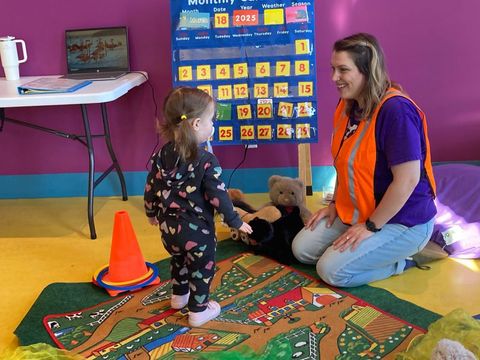
An adult might kneel nearby, speak calmly, and acknowledge the disappointment.
"I can see you're upset. You were still playing with that."
The adult isn't making the disappointment disappear. Instead, they're helping the child experience a difficult feeling with support.
Over time, these repeated experiences can help children develop their own strategies for handling frustration, disappointment, and other strong emotions.
Co-regulation doesn't mean an adult must remain perfectly calm every moment. It means recognizing that our responses can influence how children experience and recover from emotional situations.
Connection Before Correction
When a child is extremely upset, reasoning with them may not be the most effective first step.
Think about how difficult it can be to listen to advice when you're feeling overwhelmed. Young children often have even greater difficulty processing explanations during moments of intense distress.
The American Academy of Pediatrics emphasizes the importance of helping children feel safe and regulated before expecting them to reason through a stressful situation.
That might mean staying nearby, speaking gently, reducing stimulation, or allowing a child some time to settle.
Once the child is calmer, there's a better opportunity to talk about what happened and explore different ways to respond next time.
The goal isn't to eliminate difficult emotions. It's to help children learn what to do when those emotions arise.
Five Ways to Support Your Child's Emotional Development
1. Give Feelings a Name
Help children build emotional vocabulary by identifying feelings such as happiness, frustration, sadness, and disappointment. Simple observations like, "You seem frustrated that your tower fell," help children begin connecting words to their experiences.
2. Acknowledge Feelings While Maintaining Boundaries
Children need both understanding and consistent limits. Saying, "It's okay to feel angry, but it's not okay to hit," validates their emotions while reinforcing appropriate behavior.
3. Offer Choices When Appropriate
Providing two simple choices gives children a sense of independence and control. For example, "Would you like to put on your coat or your shoes first?" Small decisions can help reduce unnecessary power struggles.
4. Recognize Potential Triggers
Hunger, fatigue, overstimulation, and unexpected transitions can contribute to emotional outbursts. Recognizing patterns and preparing children for changes, such as giving a warning before leaving an activity, can make transitions easier.
5. Practice Emotional Skills Through Play
Books, puppets, pretend play, and everyday conversations provide opportunities to explore feelings when children are calm. These experiences help children practice emotional expression and problem-solving in a relaxed environment.
Try It Through Play: Everyday Opportunities at CMOO
Play provides children with opportunities to experience and work through a wide range of emotions. Excitement, frustration, disappointment, pride, and curiosity can all emerge naturally as children explore, interact, and make discoveries.
At the Children's Museum of Oswego, our open-ended play environments encourage children to follow their interests, make choices, and explore at their own pace. Along the way, everyday experiences can become meaningful opportunities for emotional growth.
When something doesn't go as planned: A child may become frustrated when an idea doesn't work the way they imagined. Rather than immediately stepping in, caregivers can acknowledge their feelings and offer encouragement: "That didn't turn out the way you expected. What would you like to try next?"
When it's difficult to wait: Sharing a play space with others can sometimes lead to disappointment. Caregivers can help children recognize their emotions while guiding them toward patience and flexibility: "I know you're excited to have a turn. What could we explore while we wait?"
When it's time to say goodbye: Leaving an enjoyable experience can bring big feelings, especially for young children. Giving advance notice, acknowledging their disappointment, and offering reassurance can help make transitions easier.
These moments remind us that emotional development doesn't happen only during structured lessons. It happens through everyday experiences, with caring adults nearby to offer understanding, guidance, and support.
What About Tantrums?
Tantrums are a common part of early childhood, particularly during the toddler years.
They can happen when children are frustrated, overwhelmed, tired, or unable to communicate what they need.
When a tantrum occurs, begin by ensuring everyone is safe.
Stay as calm as possible, use simple language, and avoid lengthy explanations while your child is highly distressed.
Some children want comfort or closeness. Others need a little space while knowing a trusted adult is nearby.
Follow your child's cues while maintaining appropriate safety boundaries.
Once the moment has passed, reconnect and, when appropriate, briefly discuss what happened.
For example:
"You were upset because you wanted another turn. Next time, we can ask for help or use our words."
Remember that emotional regulation develops gradually. A child may understand a strategy during a calm conversation but still struggle to use it when upset.
That doesn't mean the learning isn't happening.
Supporting Children Without Expecting Perfection
Every child develops differently.
Temperament, communication abilities, sensory preferences, developmental stage, and individual experiences can all influence how children express and manage emotions.
Some children recover quickly from disappointment. Others need more time and support.
And even children who usually manage frustration well can have difficult days.
Parents and caregivers have difficult moments, too.
If you respond more sharply than you intended, you can model another important skill: repairing a relationship.
"I was frustrated, and I raised my voice. I'm sorry. Next time, I'm going to try to speak more calmly."
Children learn not only from how we handle their emotions but also from how we manage our own.
If emotional outbursts are unusually intense, frequent, prolonged, involve significant safety concerns, or interfere with everyday life, speak with your child's pediatrician for individualized guidance.
Growing Emotional Skills, One Experience at a Time
Helping children navigate big feelings isn't about preventing every tear, disappointment, or moment of frustration.
It's about giving them the support, language, experiences, and opportunities they need to gradually understand their emotions and develop ways to respond.
Sometimes that means offering comfort.
Sometimes it means holding a boundary.
And sometimes it means simply being present while a child works through something difficult.
At the Children's Museum of Oswego, we believe that play is about more than having fun. It's an opportunity for children to discover their abilities, build relationships, express themselves, and learn how to navigate the world around them.
Whether those experiences happen at CMOO, at home, or out in the community, the most meaningful learning often grows from everyday moments shared between children and the adults who support them.
Sources & Further Reading
This article draws on established guidance in early-childhood development, emotional regulation, and positive parenting.
- Centers for Disease Control and Prevention (CDC): Tips for Understanding and Enjoying the Early Years
- CDC: Tips for Noticing and Naming Emotions
- CDC: How to Use Time-In
- American Academy of Pediatrics, HealthyChildren.org: Why Kids Act Out: Tips to Help Your Child Cope With Stress
- American Academy of Pediatrics, HealthyChildren.org: What's the Best Way to Discipline My Child?
- ZERO TO THREE: Toddler Tantrums and Meltdowns
This article provides general educational information and is not intended to replace individualized developmental or medical guidance.
Written by the Children's Museum of Oswego as part of Growing Curious Minds, our educational blog exploring child development, hands-on learning, and the power of play.