
Watch a young child attempt to open a container filled with their favorite toys. They might hold it in one hand while trying to remove the lid with the other. Perhaps the container keeps slipping, or they haven't quite figured out how to hold it steady while twisting.
What seems like a simple task actually requires something remarkable: both hands working together, each with a different job.
Now think about a child tearing paper for an art project, building with blocks, or learning to use scissors. Although these activities look very different, they share an important developmental foundation.
Children are learning how to coordinate both sides of their bodies to accomplish a task.
In our introductory article, Little Hands, Big Skills: Understanding the Foundations of Fine Motor Development, we explored nine interconnected areas that contribute to children's developing hand skills. Among them were bilateral coordination, crossing the midline, and hand preference.
These abilities work together in everyday activities, helping children become increasingly confident and independent.
Let's take a closer look at how they develop and why something as simple as playing with two hands can be so meaningful.
Bilateral Coordination: When Two Hands Work Together
Bilateral coordination is the ability to use both sides of the body together in an organized way.
Although we often associate coordination with activities such as running, jumping, or catching a ball, it also plays an important role in fine motor development.
Consider how many everyday tasks require two hands:
- Holding a bowl while stirring ingredients.
- Pulling apart pieces of paper.
- Fastening buttons or zipping a jacket.
- Holding a piece of paper while drawing.
- Building and connecting construction materials.
Each activity requires the hands to communicate and cooperate, even when they're performing different movements.
Pediatric occupational therapists commonly describe several ways children use both sides of their bodies together.
Moving Together
Sometimes both hands perform the same movement at the same time.
Think about a child using a rolling pin to flatten play dough, clapping along to music, or catching a large ball with both hands.
These activities encourage the two sides of the body to work together toward a shared goal.
Taking Turns
Other activities require alternating movements.
Pulling a rope hand over hand, climbing, or moving through a crawling game involves coordinating one side of the body and then the other.
These experiences help children organize movements and develop smoother coordination.
Doing Different Jobs
One of the more complex forms of bilateral coordination happens when each hand performs a different task at the same time.
For example, a child may hold a piece of paper steady with one hand while cutting with scissors in the other.
One hand guides the scissors. The other positions and turns the paper.
Both hands are essential, even though their jobs are different.
This type of coordination becomes increasingly important as children develop more precise fine motor skills.
The Helping Hand: An Important Partner
When we watch children draw, paint, or cut, our attention often goes directly to the hand holding the tool.
But what about the other hand?
Occupational therapists sometimes refer to it as the helping hand or supporting hand.
While one hand performs the more detailed movement, the other provides stability, holds materials in place, or adjusts their position.
Imagine trying to draw a picture while the paper slides across the table. Without a hand to stabilize it, controlling the pencil becomes much more difficult.
The same thing happens when children try to open a jar, thread beads, or assemble construction materials.
One hand may be doing the more noticeable work, but the helping hand makes that work possible.
As children gain experience, they become better at coordinating these different roles.
You might notice a young child initially attempting to complete a task with one hand, even when using two would make it easier. With practice and exploration, they may begin holding an object steady while manipulating it with the other.
Sometimes the biggest developmental progress isn't in what the working hand can do, but in how well the other hand learns to help.
Crossing the Midline: Reaching Beyond the Center
Imagine an invisible line running from the top of your head down through the center of your body, dividing it into left and right halves.
This is called the body's midline.
Crossing the midline happens when a hand, arm, or leg moves across that imaginary line to the opposite side of the body.
For example, a child might reach across their body to pick up a block, draw a long line from one side of a page to the other, or move a toy car along a winding road.
These movements may seem insignificant, but they involve coordination between the two sides of the body.
Young children sometimes prefer to use their right hand for objects on their right and their left hand for objects on their left. They may also turn their bodies to reach something rather than moving an arm across the center.
As coordination develops, crossing the midline can become more natural and efficient.
Why Does Crossing the Midline Matter?
Crossing the midline supports the ability to move comfortably across a workspace without constantly changing hands or repositioning the body.
Consider a child drawing a large rainbow across a sheet of paper. As their arm moves from one side to the other, it crosses the center of their body.
Or imagine reaching across a table to collect materials for an art project.
These experiences encourage coordinated movement across both sides of the body.
Crossing the midline is one part of motor development, not a separate skill children need to master through repetitive drills. It develops alongside balance, postural control, coordination, and other motor abilities.
And like many developmental skills, it can be encouraged naturally through play.
Hand Preference: Finding a Comfortable Way to Work
Have you ever noticed a young child switching a crayon from one hand to the other while drawing?
Parents sometimes wonder whether this means their child hasn't decided if they're right-handed or left-handed.
In reality, hand preference develops gradually.
During early childhood, children explore using both hands. They may choose whichever hand is closest to an object or switch hands depending on the activity.
Over time, many children begin using one hand more consistently for tasks requiring precision, while the other takes on a supporting role.
This emerging preference is part of developing coordinated hand use.
Should Parents Encourage One Hand Over the Other?
Children should not be forced to become right-handed or left-handed.
Instead, caregivers can provide opportunities for children to use both hands naturally and observe which hand they begin to prefer.
One simple approach is to place materials near the center of a child's workspace, allowing them to choose which hand to use rather than always presenting an object on one side.
It's also important to remember that hand preference and hand coordination are related but not identical. A child may show a preference for one hand while still developing the ability to use both hands together effectively.
Frequent hand switching isn't automatically a concern, particularly in younger children. However, persistent difficulty coordinating both hands, unusual fatigue, or challenges completing everyday activities may be worth discussing with a pediatrician or pediatric occupational therapist.
The goal isn't to rush children toward a particular hand preference.
It's to give them meaningful opportunities to develop comfortable, coordinated movements.
Try It Through Play: Everyday Opportunities to Build Coordination
One of the best things about bilateral coordination is that children can practice it through ordinary experiences.
There's no need for complicated equipment or formal exercises. Many familiar play activities naturally encourage the hands to work together.
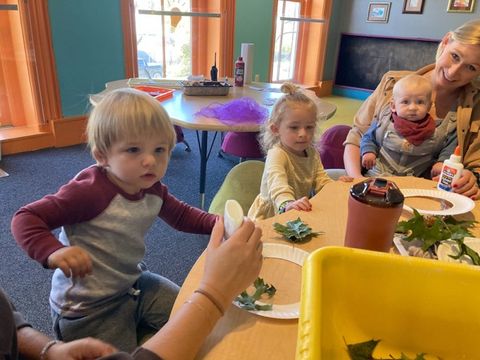
Tear, Crumple, and Create
Provide paper in different colors and textures and invite children to tear it into pieces for a collage.
Tearing requires both hands to grip and pull in coordinated directions. Children can experiment with making long strips, small pieces, or interesting shapes.
Crumpling paper into balls offers another opportunity for two-handed exploration.
The finished artwork doesn't need to look a particular way. The value comes from the movements, decisions, and experimentation involved in creating it.
Roll, Shape, and Build
Play dough provides opportunities to squeeze, roll, flatten, pull, and shape materials.
Children might use both hands to roll a long snake, hold a piece steady while adding details, or use a rolling pin to flatten their creation.
These movements encourage coordination while also engaging hand strength, sensory awareness, and motor planning.
Thread and Connect
Threading large beads onto a cord requires one hand to stabilize the cord while the other guides the bead into position.
Connecting construction materials offers similar opportunities. Children may hold one piece steady while attaching another, then adjust their grip as their creation grows.
Choose materials appropriate for the child's age and abilities, and avoid small pieces that could present a choking hazard.
Make Big Movements
Coordination doesn't happen only at a table.
Drawing large circles or rainbows on paper, moving scarves through the air, or reaching across the body during a playful movement game can encourage children to explore a wider range of motions.
These activities offer natural opportunities to cross the midline without turning the experience into a formal exercise.
Bring Children Into Everyday Tasks
Some of the most meaningful opportunities happen during ordinary family routines.
Children can help stir ingredients while holding a bowl, pull apart lettuce for a salad, open containers, fold washcloths, or assist with age-appropriate dressing tasks.
These experiences give coordination a purpose.
Rather than practicing a movement simply to practice it, children are using their developing abilities to participate in everyday life.
What Caregivers Can Look For
As children explore, it can be interesting to notice how they approach tasks requiring two hands.
Does your child use one hand to hold materials steady while the other works? Do they experiment with different ways of gripping objects? Can they move an arm comfortably across their body? Are they beginning to show a preference for one hand during detailed activities?
These observations can offer insight into how a child's coordination is developing.
However, they aren't a checklist or a test.
Children develop motor skills at different rates, and their abilities can vary depending on the task, their experience, and how comfortable they feel.
Rather than correcting every movement, give children time to experiment.
If they're struggling, consider whether a small adjustment might help. A larger object, a more stable surface, or a different material may make an activity easier to explore.
And when a child discovers a new way to accomplish something, acknowledge the process.
"You figured out how to hold that steady while you opened it!"
Recognizing effort and problem-solving can encourage children to continue exploring their abilities.
If difficulties with two-handed activities consistently interfere with play, dressing, eating, or other daily routines, a pediatrician or occupational therapist can help determine whether additional support would be useful.
Growing Skills, One Hand at a Time
When children learn to use both hands together, they're developing much more than the ability to hold and manipulate objects.
They're learning how to organize movements, coordinate different actions, and adapt their approach when something doesn't work as expected.
These abilities support everyday independence, from managing clothing and utensils to drawing, cutting, building, and creating.
At the Children's Museum of Oswego, we believe open-ended play gives children meaningful opportunities to explore these developing skills at their own pace.
Whether they're creating something new, experimenting with materials, or simply figuring out how to accomplish a task, children are building coordination through experience.
And sometimes, the most important learning happens when two little hands discover how much they can accomplish together.
Sources & Further Reading
This article draws on pediatric occupational therapy guidance about bilateral coordination, crossing the midline, hand preference, and fine motor development.
- Berkshire Healthcare NHS Foundation Trust: Bilateral Coordination: Coordinating Left and Right Sides
- Alder Hey Children's Hospital: Fine Motor Skills: Five Steps to Function
- Somerset NHS Foundation Trust: Crossing the Midline of the Body
- Children and Family Health Devon, NHS: Play and Hand Skills: Bilateral Coordination
- Just One Norfolk, NHS: Fine Motor Skills
- Royal Children's Hospital Melbourne: Crossing the Midline: Occupational Therapy Activity Ideas
This article provides general educational information and is not intended to replace individualized developmental or medical guidance.
Written by the Children's Museum of Oswego as part of Growing Curious Minds, our educational blog exploring child development, hands-on learning, and the power of play.